


Are Cracks in Timber Shelters Normal?

Understanding Timber Movement Outdoors
If you’ve recently noticed cracks in your timber shelter, you’re probably wondering the same thing many customers ask us:
“Is this normal?” The short answer is: in most cases, yes.
Seeing cracks in a wooden bus shelter or outdoor timber structure can feel worrying at first, especially when you’ve invested in something designed to serve the community for many years. But timber is a natural material, and part of what makes it beautiful, durable and full of character is also what makes it move and change over time.
At Littlethorpe, we’ve been building hand-crafted hardwood bus shelters since 1983 using traditional joinery methods and sustainably sourced timber. We design our shelters specifically for life outdoors in the British climate, and that includes understanding how timber behaves through changing seasons.
In this article, we’ll explain:
- why timber cracking outdoors happens;
- what kinds of cracks are considered normal;
- when it’s worth getting in touch;
- and why visible movement in timber is usually a sign of natural behaviour rather than product failure.
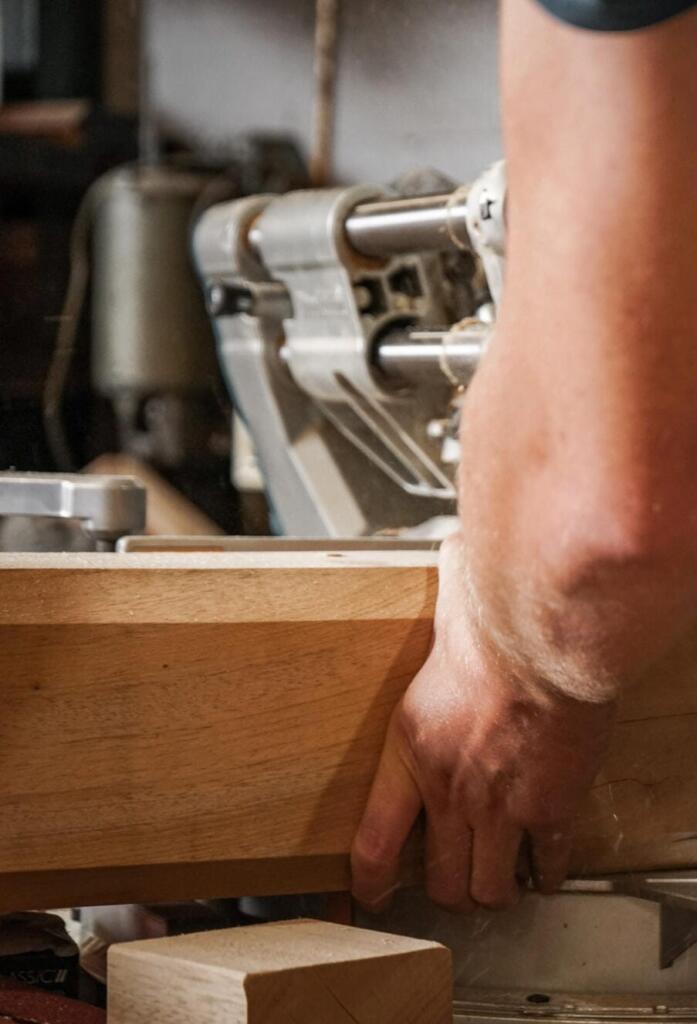

Why am I seeing cracks in my timber shelter?
Timber is an organic material. Even after it has been carefully selected, machined and installed, it still responds naturally to the environment around it. As outdoor temperatures and moisture levels change throughout the year, timber absorbs and releases moisture. That causes the wood to expand and contract slightly over time.
This movement is completely normal.
When timber dries, particularly after wet weather followed by warmer or windy conditions, small cracks can sometimes appear on the surface. These are often referred to as “checks”, which are natural splits that occur as the outer layers of timber dry at a different rate to the centre. In most cases, these cracks are cosmetic rather than structural.
A lot of customers understandably become concerned because the crack suddenly catches their eye. But once you start noticing timber movement, you begin seeing it everywhere; in benches, gate posts, fencing, bollards, noticeboards and outdoor oak structures across towns and villages throughout the UK. Most people simply don’t look closely at timber until it’s part of a structure they’re responsible for.
If you work with real timber outdoors long enough, you’ll see movement in almost every structure eventually. That’s simply the nature of wood.
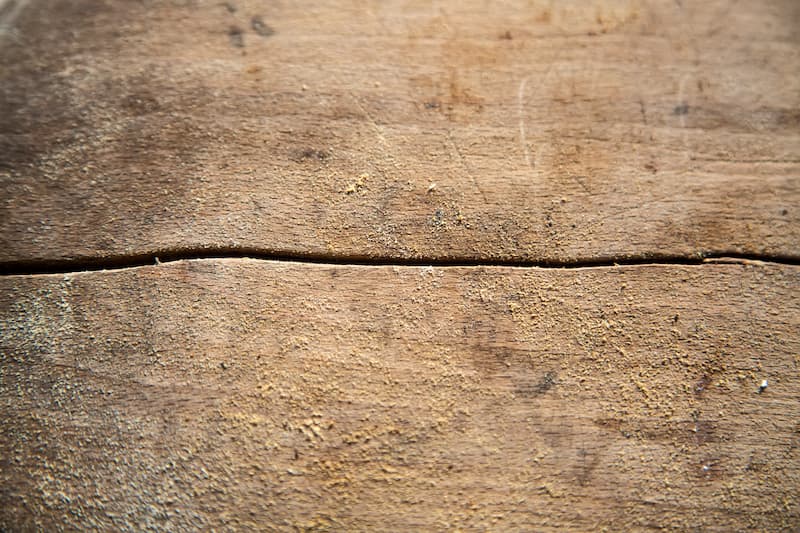

Timber is a natural material which is part of the appeal
One of the reasons communities choose timber shelters is because they feel warmer, more natural and more sympathetic to their surroundings than heavily industrial alternatives. Real wood has grain, texture, variation and individuality and no two pieces are exactly the same.
That natural character is part of what gives timber structures their visual warmth and long-term appeal. A perfectly uniform piece of timber that never changes outdoors simply isn’t how natural wood behaves. At Littlethorpe, we believe outdoor structures should age naturally and sit comfortably within the character of a village, town or public space.
Our approach centres on creating “beautiful, sustainable wooden infrastructure built to last, not rust.” That philosophy comes with an understanding that timber will naturally move throughout its life outdoors. It’s also important to separate two very different things:
- natural timber character and movement;
- genuine structural problems.
Small surface cracks, seasoning checks and minor movement are common characteristics of outdoor timber products. Structural concerns such as instability, impact damage, severe splitting or visible failure affecting the integrity of the shelter are something entirely different however.
In the vast majority of cases, the kinds of cracks customers send us photos of fall firmly into the first category.
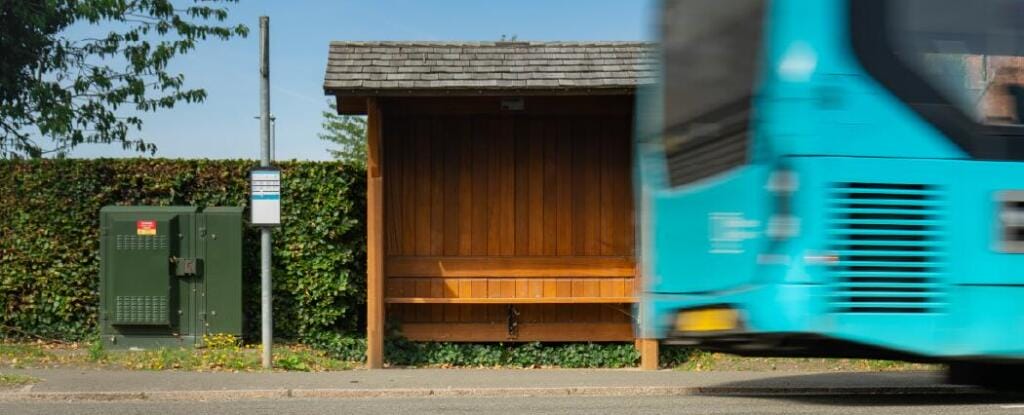

What kinds of cracks in timber are normal?
Outdoor timber structures commonly develop small visible cracks over time, particularly in exposed areas.
This can vary depending on:
- sunlight exposure;
- weather conditions;
- moisture levels;
- the size of the timber section;
- and seasonal temperature changes.
Some of the most common examples include:
Surface checking
These are shallow cracks that appear along the grain of the timber and are especially common during warmer or drier periods. They are one of the most typical forms of timber movement outdoors.
End grain splitting
Small splits near the ends of timber sections can also occur naturally because moisture tends to leave these areas more quickly.
Seasonal movement
Some cracks become more visible during hot, dry weather and then reduce again during colder or wetter periods.
Natural variation between components
Not every timber section behaves identically. One post may remain relatively unchanged while another develops visible checks but this variation is considered normal in natural hardwood products.
When timber is properly selected and the structure is correctly designed, these kinds of cracks do not normally affect the overall strength, durability or lifespan of the shelter. Experienced joiners account for this movement from the very beginning. Timber movement outdoors is not unexpected, but simply part of working with a natural material.

What’s usually nothing to worry about?
In most cases, the following are considered normal characteristics of outdoor timber:
- shallow surface cracks;
- cracks running with the grain;
- minor seasonal opening and closing;
- isolated splits that do not affect stability;
- visual differences between timber sections.
A timber shelter can remain structurally strong, safe and long-lasting while still showing natural signs of movement and ageing. At Littlethorpe, our shelters are designed specifically for outdoor public environments using durable FSC® certified hardwood selected for long-term external use.
Visible timber movement does not automatically mean the shelter is failing. In fact, properly detailed hardwood structures are expected to continue performing outdoors for many years while naturally developing character over time.
When should you get in touch?
Although most timber cracking is harmless, there are occasions where it’s sensible to ask for advice. We always encourage customers to contact us if something doesn’t look right or if they’d simply like reassurance.
As a general guide, it’s worth getting in touch if you notice:
- unusually large or deep cracks in major structural components;
- sudden changes following a vehicle impact, vandalism or storm damage;
- movement that appears to affect stability;
- timber sections visibly pulling apart;
- or anything that creates a genuine safety concern.
A visible crack on its own is rarely the full story. We’d be more concerned by instability, impact damage or structural movement than by normal surface checking. In many cases, a few clear photographs are enough for our team to advise whether what you’re seeing is simply natural timber behaviour or something that needs a closer look.
Why Littlethorpe uses high-quality, responsibly sourced timber
Littlethorpe shelters are manufactured using FSC® certified hardwood sourced from responsibly managed forests. We use hardwood because of its excellent strength, durability and long-term performance outdoors. Our shelters are built by hand in Leicester using traditional joinery methods developed over decades of manufacturing outdoor timber infrastructure.
Working with timber properly isn’t about trying to stop wood from behaving naturally. It’s about understanding how it behaves and designing accordingly. Our shelters are built with real outdoor conditions in mind:
- changing weather;
- moisture variation;
- public use;
- and long-term exposure to the elements.
Some visible movement in the timber is already accounted for within the design and specification process.
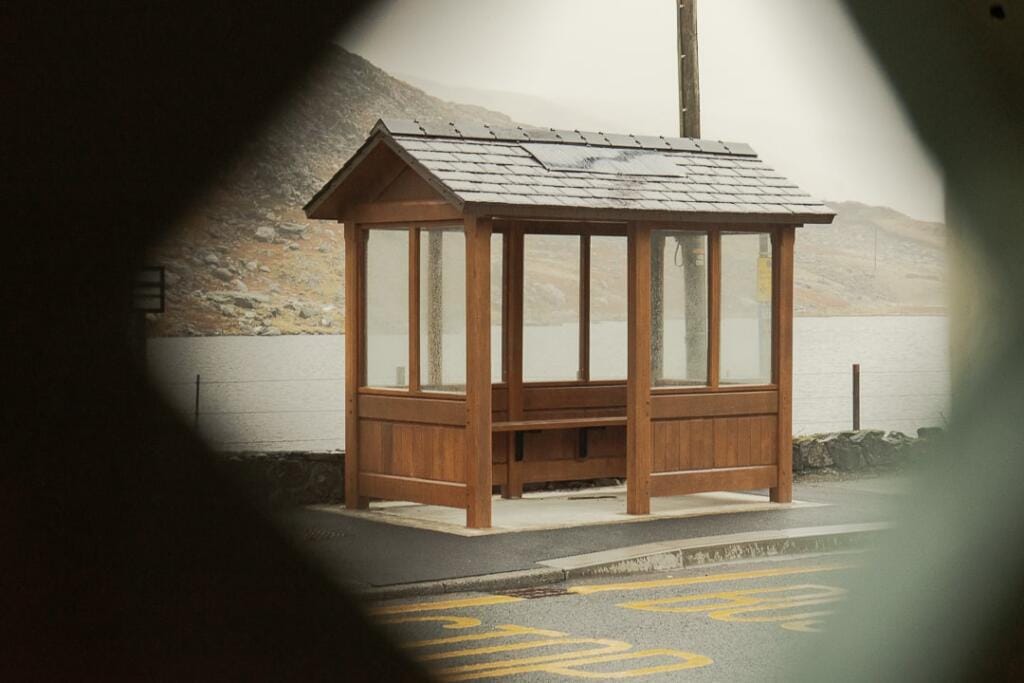

Designed for life outdoors
One thing we often reassure customers about is this:
The presence of timber movement does not mean the shelter has been poorly made. In reality, experienced joiners expect timber to move outdoors. Quality timber structures are designed with that movement already in mind. At Littlethorpe, every shelter is hand-built by skilled joiners using outdoor-suitable hardwoods and traditional manufacturing methods.
That includes understanding:
- how timber expands and contracts;
- how moisture affects exposed sections;
- and how to create structures that remain durable and reliable over decades of outdoor use.
Real timber will always change slightly over time which isn’t a flaw in the material. It’s one of the characteristics of choosing a genuine natural product.
Character, not catastrophe
It’s completely understandable to feel concerned when you first notice cracks in a timber shelter. In most cases, what you’re seeing is simply the natural behaviour of outdoor hardwood doing exactly what timber has always done. It moves. It dries. It changes with the seasons. When properly selected and crafted, it continues performing beautifully for decades.
A small amount of visible cracking is usually a sign of natural timber character, not a sign that something has gone wrong. If you’re ever unsure though, we’re always happy to help. Send a few clear photos over to Littlethorpe and our team will gladly take a look and advise.
By buying our FSC® Certified shelters, you are helping to preserve the future of the world’s forests by making sure the forests are properly maintained.
We are so confident in the robustness and quality of our work that we can offer exceptional guarantees. These ensure added protection and confidence to our customers.
- Five year guarantee against our shelters being kicked in or burnt down
- One year money-back guarantee against our 15mm toughened glass being broken

FSC® certificate number of INT-COC-003944-262
FSC® logo license number of FSC-C109654